



Leadership at Its Best – The Eras Tour



Sustainable Excellence in a $2 Billion Global Operation
Exceptional leadership is rarely observed at full scale, under pressure, and over time. Occasionally, however, a real-world example offers a clear view of what sustained excellence requires. This is a leadership blog I never expected to write!
The 2023-24 global Eras Tour envisioned, orchestrated, and performed by Taylor Swift was designed for entertainment, but the leadership disciplines behind it are directly applicable to education, healthcare, athletics, and other complex, mission-driven organizations. This was not about short-term success. It was about thinking long-term. The result was a nearly-two-year global operation executed with consistency, care, and endurance.
The Scale of the Leadership Challenge
The scope alone demanded exceptional leadership competency:
- 149 stadium events across five continents
- A nearly-two-year operational run
- ~10 million attendees
- ~$2.2B in ticket revenue
- ~$197M in bonuses paid to performers and crew (in addition to salaries)
- An estimated $4.3B economic impact in the U.S.
- A repeatable, high-energy, three-hour 44-song production
This level of performance required leadership systems, not heroics.
The Leadership Demonstrated
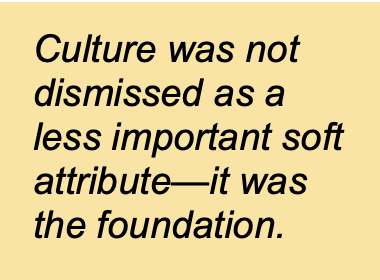 1. Culture as an Operating System – The right people made this work—they were humble, eager to learn, and deeply committed to a shared vision. Recognition and compensation were not symbolic; they were purposeful. Substantial bonuses reinforced pride, ownership, and accountability. When people feel valued, standards are protected, even when leaders are absent.
2. High Standards with Support – This complex, high-risk operation succeeded because expectations were clear, preparation was disciplined, and learning was continuous. Excellence was a shared responsibility at every level. Inspiration builds belief. Supportive preparation sustains performance.
3. People’s Experience Is the Brand – The organization’s promise was delivered not through messaging but through personal experiences, including how team members and audiences were treated, how problems were addressed, and how discipline was maintained under pressure. The brand shined in the team’s behavior, especially during moments of stress.
4. People Impact Beyond the Balance Sheet – Leadership decisions affected communities, team members, attendees, and the talent pipelines. Success was measured by its impact on people. Revenue followed, but it was not the purpose. Sustainable leadership requires asking: Who benefits, and who bears the cost?
5. High Standards Paired With Humanity – High expectations coexisted with respect, recognition, and psychological safety. That combination enabled people to take responsibility rather than avoid risk. When people are respected, they take ownership. Trust scales execution.
6. Endurance as a Strategic Discipline – Performance across 149 events demanded intentional pacing, recovery rituals, and disciplined leadership. Energy management was treated as a strategic priority. Peak Performance depends on renewal, not on intensity alone.
Alignment with The Shift from Me to Team
Reflected across these disciplines are the core principles of The Shift from Me to Team:
- A legacy vision designed to impact many
- Reinforcing systems role-modeled by leadership
- A Core Identity that creates natural, sustainable flow, built on:
- Growth Mindset: Continuous learning and refinement
- Servant Purpose: Leadership exercised in the service of people
- Trust and Integrity: Alignment between values, decisions, and actions
- Caring and Respect: Psychological safety without lowering standards
The result is not fleeting success but sustainable Peak Performance.
A Key Leadership Insight
We are often told that leaders must choose between results and humanity. The example of the Eras Tour suggests the opposite.
Humanity—the sensitivity to others’ dignity and well-being—is what makes elite execution repeatable, sustainable, and even enjoyable under the most demanding conditions.
Organizations that endure are led by individuals who understand that how people are treated ultimately determines how well—and how long—Peak Performance can be sustained.
Reflection for Leadership Teams
- Where do our systems reinforce ownership rather than compliance?
- How intentionally do we design recognition and honor recovery?
- Are we relying on individual effort—or building collective capability?
- What disciplined culture will our leadership leave behind?